EV Charger Installation FAQ
The questions Wake County homeowners ask us most.
How much does EV charger installation cost in Raleigh?
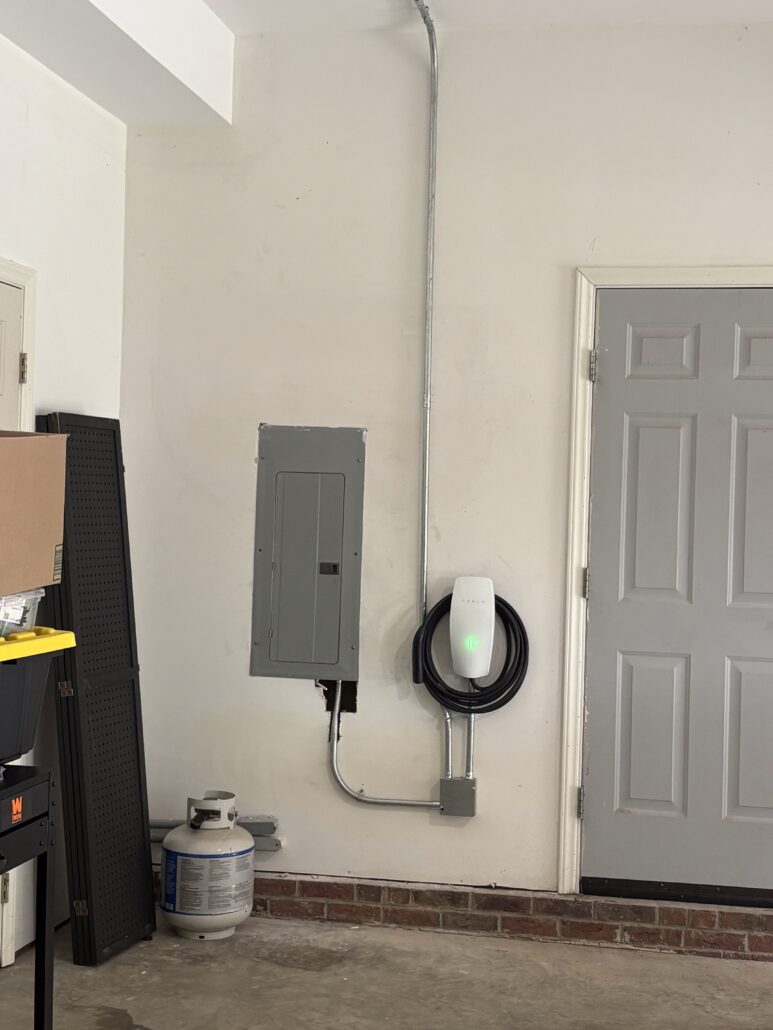
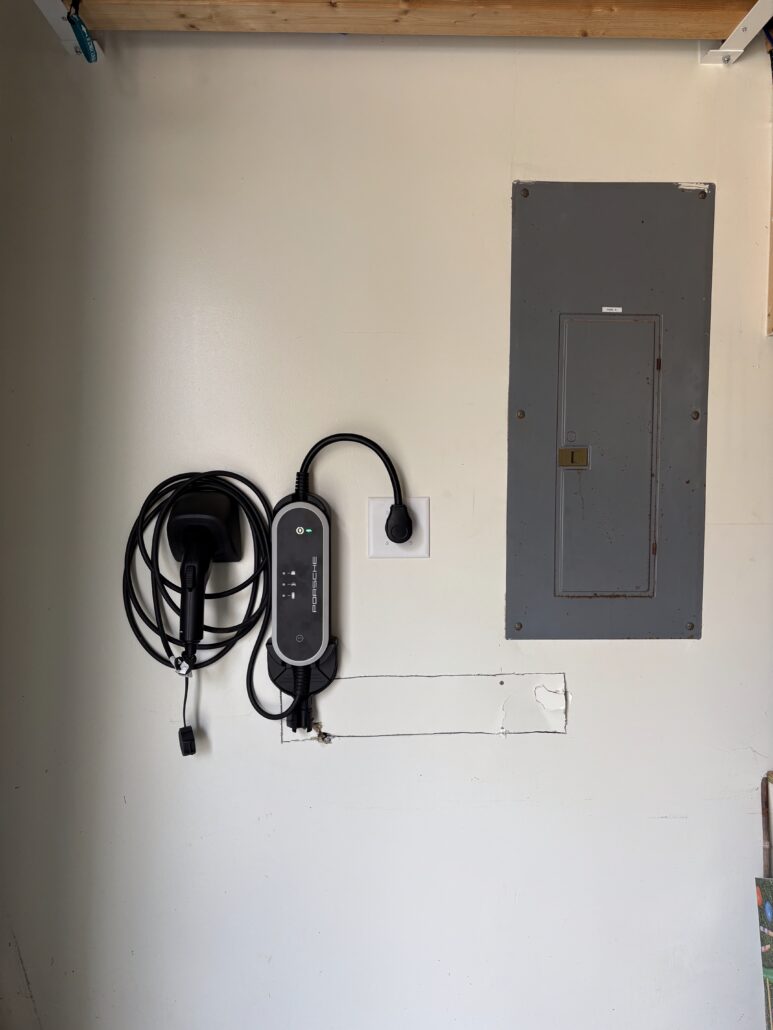
Most home installations with ARC Electric fall between $892 and $1,638. The low end is a NEMA 14-50 outlet within about five feet of your electrical panel; the high end is a hardwired charger with a wire run to anywhere in the home or garage. Both are flat rates quoted on site. The permit fee, the charging unit itself and any panel upgrade are priced separately.
How much is the Duke Energy EV charger rebate in Wake County?
Up to $1,117, one time, per charger. Duke Energy Progress serves Raleigh, Cary, Apex, Holly Springs, Fuquay-Varina and most of Wake County. The exact amount depends on your qualifying costs — you’re reimbursed for the qualifying electrical work, up to that cap.
Does the Duke Energy credit cover the charger itself?
No. The credit covers the electrical make-ready work — conduit, wiring, outlets, breaker, panel upgrade and the labor to install them. It does not cover the charging equipment, mounting the unit on the wall, or permit fees.
Can I still get the credit if my charger is already installed?
Only if you apply within 120 days of your invoice date or your EV registration date, whichever is later. Work completed before May 19, 2022 doesn’t qualify. Outside that window you aren’t eligible.
Do I qualify for the credit if I rent my home?
No. The residential Charger Prep Credit requires that you own the property. If you live in an apartment or condo, your property manager can look into Duke Energy’s commercial Charger Prep Credit program.
Do I need a permit for a home EV charger in Wake County?
Yes. An electrical permit and a final inspection are required, and Duke Energy requires a copy of the approved permit with your rebate application. ARC pulls the permit and meets the inspector. The permit fee itself isn’t a reimbursable cost under the credit, so Duke asks that it appear as its own line item on your invoice.
What documents do I need for the Duke Energy rebate application?
Four things: a copy of your EV registration showing the vehicle registered at your Duke Energy account address; a detailed, itemized, paid invoice from your contractor with materials, labor and permit costs on separate lines; a copy of the approved permit; and the completed application. ARC provides the invoice and permit copy in the format Duke Energy asks for.
How long does EV charger installation take?
Most installations are completed in a single visit, typically four hours to a full day depending on the length of the wire run and whether your electrical panel needs work. The permit inspection is scheduled separately after the work is finished.
Can my electrical panel handle an EV charger?
Most homes can support a Level 2 charger, but the panel has to be checked first. We look at the size of your electrical service, the loads already connected to it, available breaker space and the charging rate your vehicle accepts. A panel that looks full doesn’t automatically need to be replaced — load management is often the more practical option. You can get a rough answer yourself with our
free electrical load calculator. If your home needs an
upgraded panel, we can still provide a quote for that.
How many EV chargers has ARC Electric installed?
More than 1,000 across Wake County. Every installation is permitted and inspected by the local authority.
What warranty comes with the installation?
Five years on our workmanship, parts and labor. If a part fails, the manufacturer’s warranty covers the part and ARC covers the labor to replace it for five years from installation.
Can you install a charger I already bought?
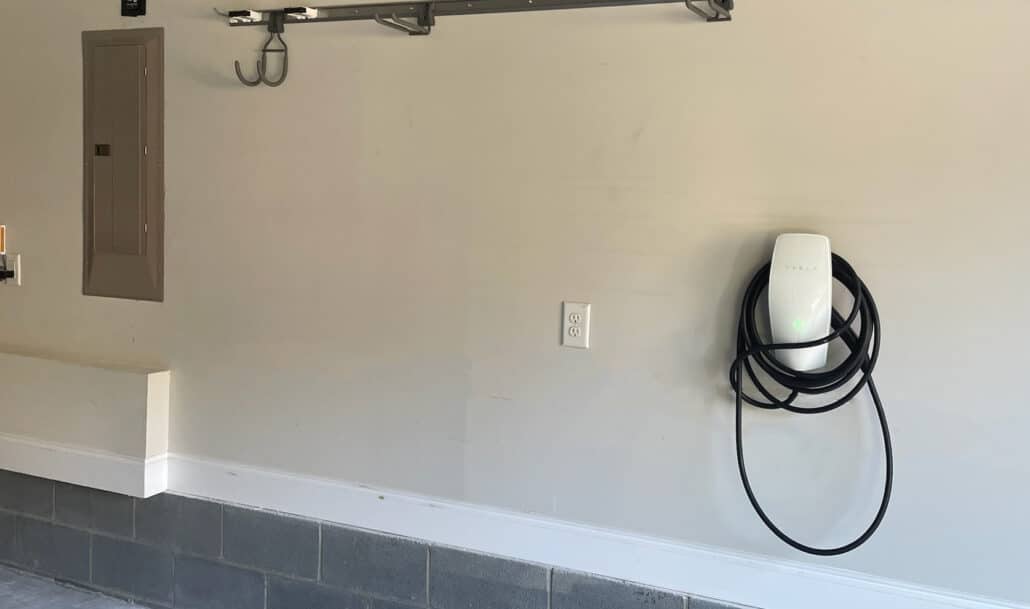
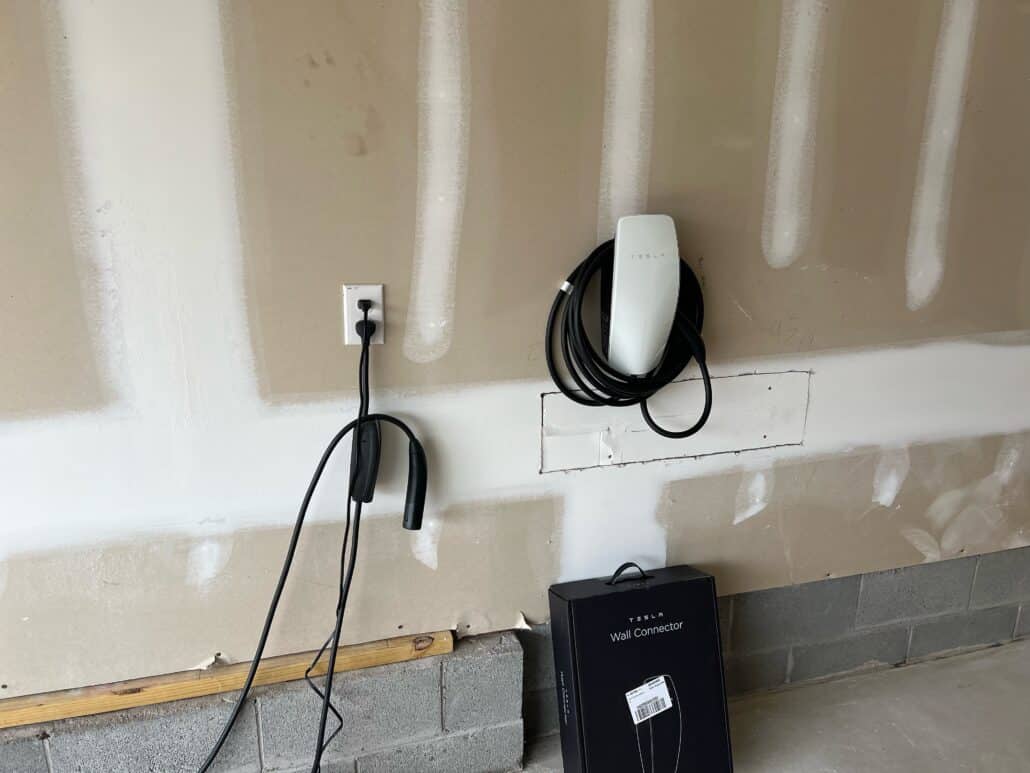
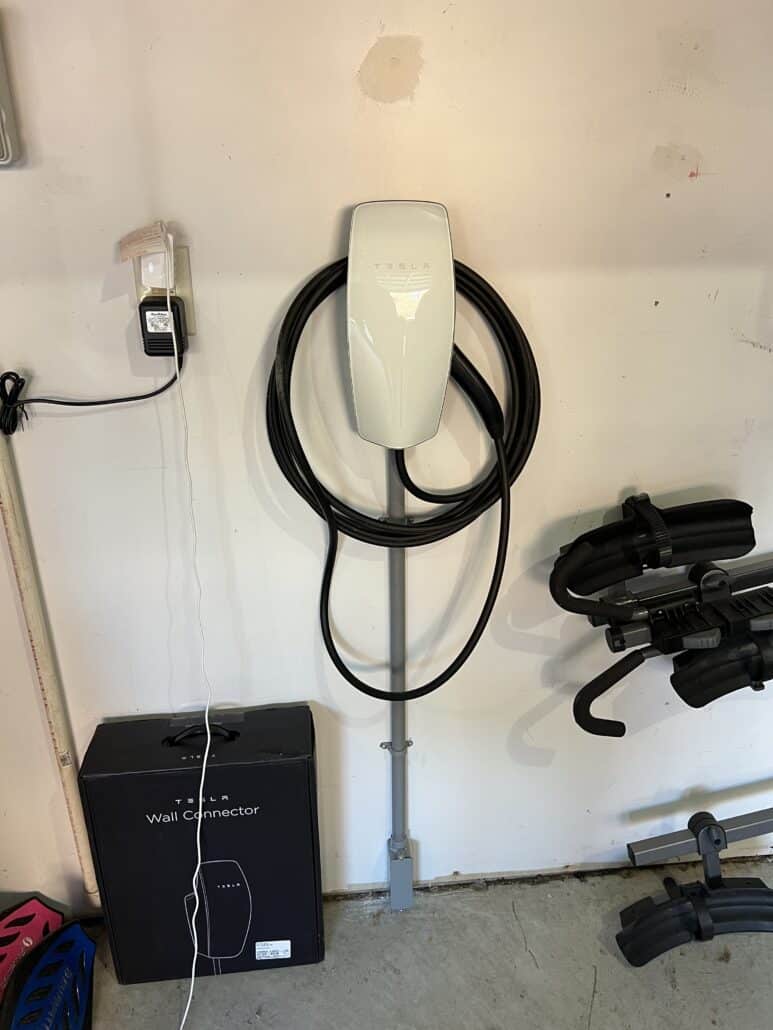
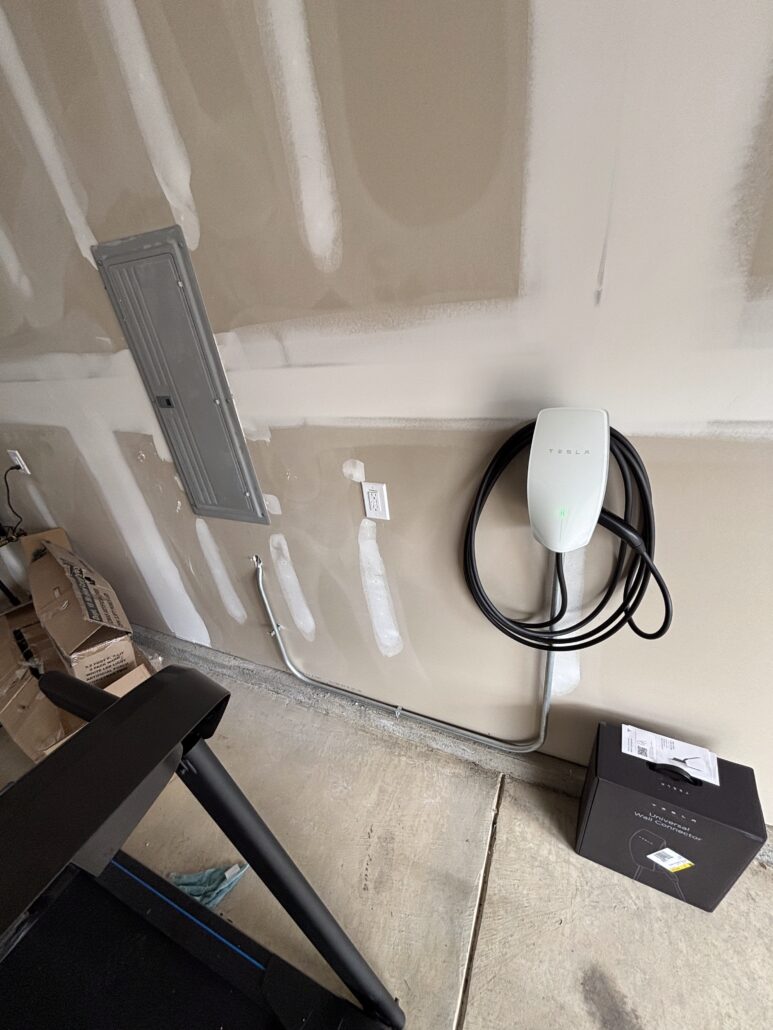
Yes. We install customer-supplied Tesla Wall Connectors and most other major Level 2 charging stations, hardwired or on a NEMA 14-50 outlet. Note that chargers over 40 amps must be hardwired and can’t run on a dryer-style plug.