Ceiling fans

Ceiling Fan Installation in Raleigh & the Triangle

New fans, replacements, porch fans and two-story ceilings, sized and hung right, with no trip charge for the quote.

A good ceiling fan is the cheapest comfort upgrade in a North Carolina house, and the most common one done wrong: too small for the room, hung too high or too low, or an indoor fan rusting on a porch. Use the calculator below to find the right size, downrod and rating, shop Lamps Plus with the filters already set, then send us the model number. We’ll get the fan and install it.

4.9 ★ · 620+ reviews · NC License #29565 · 5-year workmanship warranty · Free in-home quotes

4.9 ★Average rating620+ reviews on Google, Yelp & Nextdoor
8–9 ftWhere the blades belongNever below 7 ft off the floor
30 ftCeilings we’ve hung fans onLadders and scaffolding for any height
5-yearWorkmanship warrantyParts and labor on our workmanship; defective parts per the manufacturer, labor on us
What we install

Every kind of fan, on every kind of ceiling

Bedrooms, living rooms, porches, two-story great rooms and the occasional gym. Every job gets a fan-rated box, the right downrod and a final check that the fan runs quiet and level on every speed.

A fan where there’s only a light

Most ceiling boxes behind a light fixture aren’t rated to hold a spinning fan. We swap in a fan-rated box and brace it to the framing, then add the wiring for separate fan and light control if you want it.

Replacements and upgrades

Old, noisy or wobbling fan out, new one in. Quiet DC-motor fans with remotes, integrated LED lights, and smart controls are the usual upgrades.

Vaulted and two-story ceilings

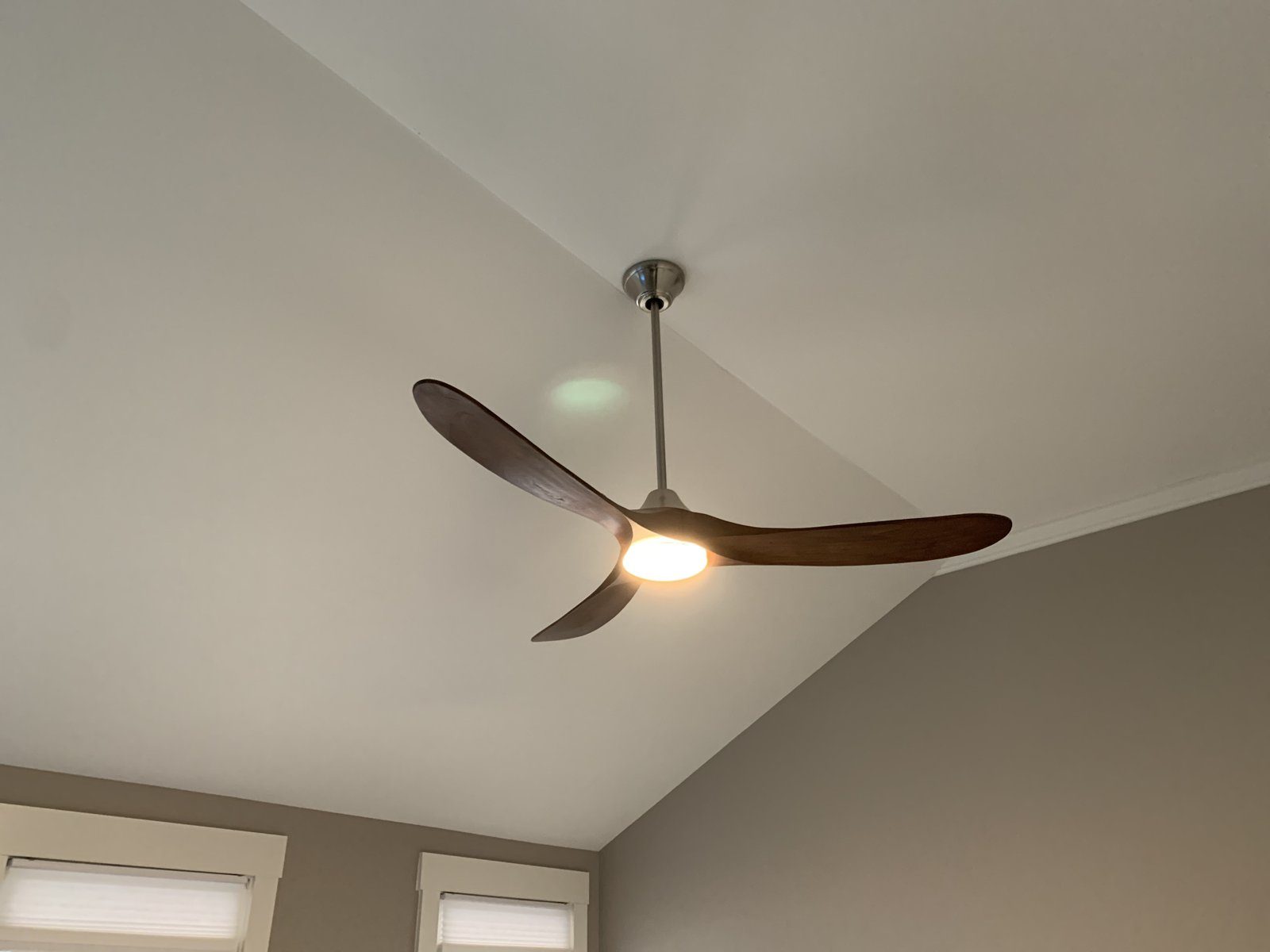
Downrods sized to the ceiling, slope adapters for angled ceilings, and the ladders or scaffolding to reach it. We’ve hung fans in 20–25 ft foyers and on 30 ft cathedral ceilings.

Porch, patio and pergola fans

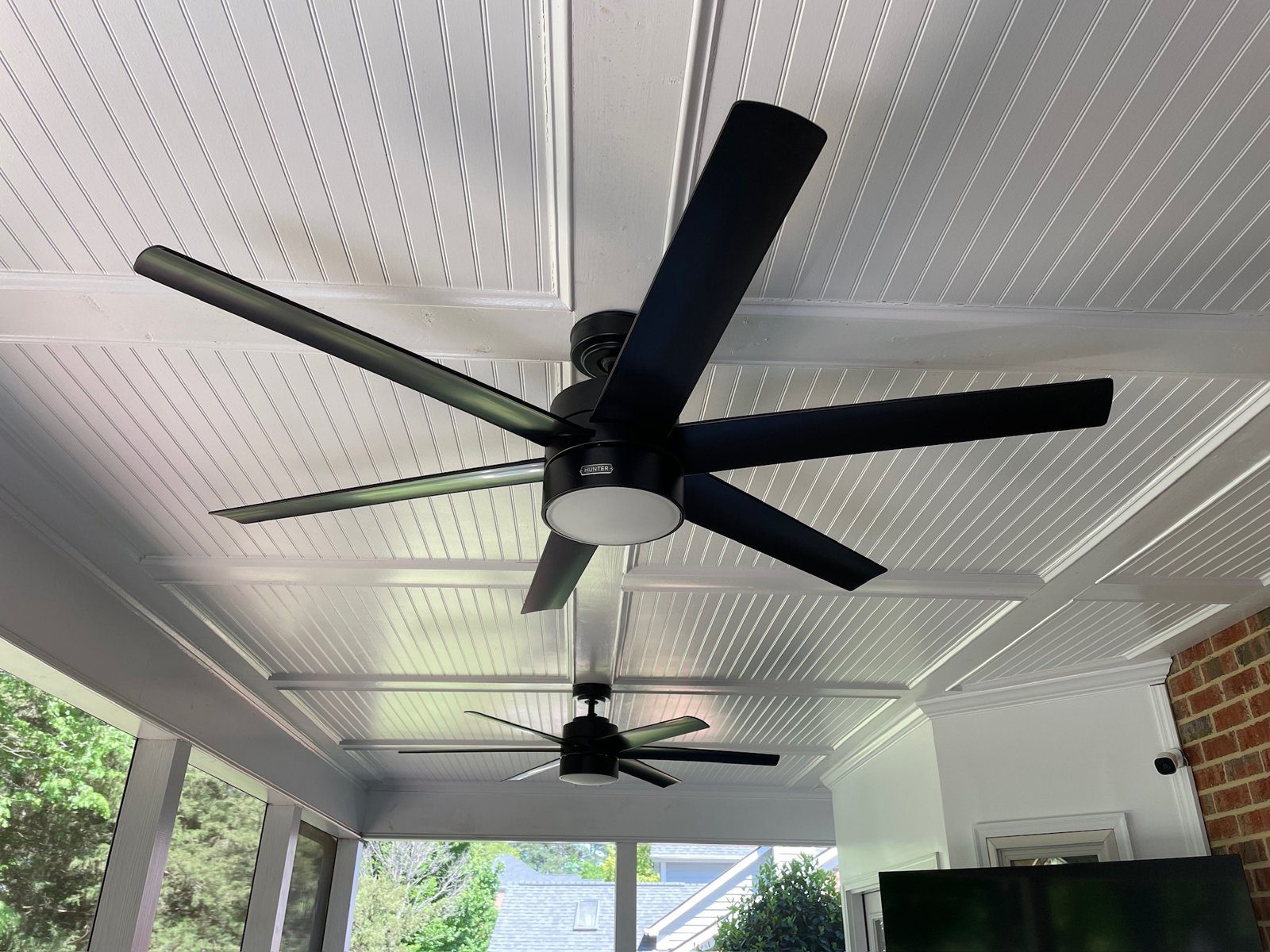
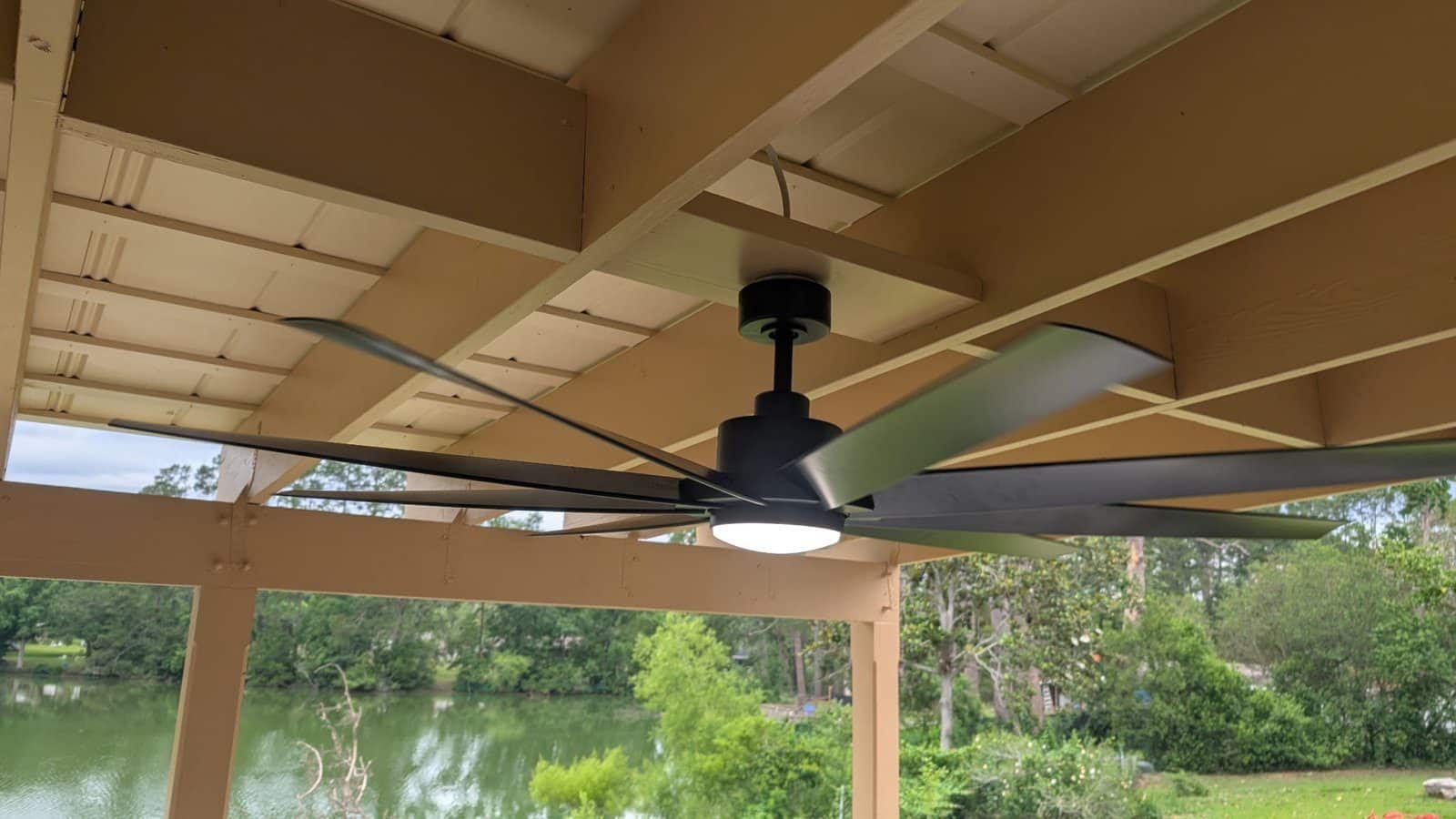
Damp-rated fans for covered porches, wet-rated fans anywhere rain can reach, on a weatherproof box with the right wall control.

Wobble fixes and controls

Balancing, loose mounts and bent brackets fixed; pull chains replaced with a wall control or remote.

Bath fans

Panasonic WhisperQuiet and WhisperWarm bath fans, with a light, heater or humidity sensor, ducted outside to clear steam and moisture.

Commercial too: we’ve installed large-diameter fans in warehouses and a sports complex. See commercial electrical.

Ceiling
Light on the fan?
52–56 in.blade span
Standardmount / downrod
Indoorrating needed
  • Enter your room to see the notes.

Shop fans that fit, with these filters already set:

Found one? Send us the model number and we’ll order it, often at a discount, and install it with the right downrod. Lamps Plus filters by span range, so check each fan’s exact size and listing on its page.

Fan size calculator

What size fan, what downrod, and what rating?

Pick the room, enter its size and ceiling height. You’ll get the blade span, the downrod length, the rating the fan needs, and a Lamps Plus search with those filters already applied.

Fan size

Size the fan to the room, not the box it came in

Measure the room and multiply length by width. A fan that’s too small won’t move enough air to feel; one that’s too big moves too much air even on low. The ranges here blend the charts from Lamps Plus, ENERGY STAR, Hunter and the Department of Energy; they agree within a few inches.

  • Rooms longer than about 18 ft usually do better with two fans than one oversized fan, one centered over each half of the room.
  • Hang it in the middle of the space you sit or sleep in. In an open plan, that’s the seating area, not the center of the whole room.
  • Blade tips at least 18 in. from walls and sloped ceilings (Hunter recommends 30 in. from walls where you can).
Room size to fan size
Room sizeTypical roomBlade span
Up to 75 sq ftUp to 9 x 8 (closet, small office, laundry)36–44 in.
76–144 sq ftUp to 12 x 12 (most bedrooms)42–48 in.
145–225 sq ftUp to 15 x 15 (primary bedroom, den)48–52 in.
226–350 sq ftUp to 18 x 19 (living room, large porch)52–56 in.
351–500 sq ftGreat room, open kitchen and family room60–66 in.
Over 500 sq ftVery large rooms and long porches66 in. and up, or two fans

Sources: Lamps Plus: How to Buy a Ceiling Fan · ENERGY STAR: Ceiling fan basics · Hunter Fan: What size fan to buy · U.S. DOE Energy Saver: Fans for cooling · This Old House: How to size a ceiling fan

Ceiling height to downrod length
Ceiling heightMount / downrod
Under 7.5 ftToo low for a fan (blades must be 7 ft up)
7.5–8 ftHugger (flush) or low-profile fan, no downrod
9 ftStandard mount (the short rod in the box)
10 ft12–18 in. downrod
11 ft18–24 in.
12 ft36 in.
13 ft48 in.
14 ft60 in.
15 ft72 in.
16–20 ft84–120 in.
Downrod & height

The downrod sets where the air lands

A fan works best with its blades 8 to 9 ft off the floor: low enough to move air where you are, high enough to be safe. The downrod is how you get there. On a tall ceiling without one, the fan just stirs the air near the ceiling.

  • 7 ft minimum from the floor to the blades. Metal-blade fans need 10 ft.
  • At least 8 in. between the blades and the ceiling; 10–12 in. moves more air. That’s why hugger fans are a compromise for low ceilings, not a first choice.
  • Sloped ceilings need a slope adapter (a must at about 25° and up), a downrod of at least 6 in. (12 in. on steep slopes), and the same brand’s parts. Measure the height where the fan will hang.
  • One downrod, never two joined. Buy the right length in the same brand and finish; we’ll confirm it at the quote.

Sources: Lamps Plus: How to Buy a Ceiling Fan · Hunter Fan: What downrod length · ENERGY STAR: Ceiling fan basics · U.S. DOE Energy Saver: Fans for cooling · Lamps Plus: When you need a slope adapter · This Old House: How to size a ceiling fan

Indoor, damp or wet

Make sure the fan is rated for where it hangs

Every fan carries a UL or ETL listing for where it can go. An indoor fan on a porch rusts, its blades warp and the motor fails early, and its warranty won’t cover it. Check the listing on the box or the spec sheet before you buy.

Dry / indoor

Bedrooms, living rooms, kitchens

Any fan can go indoors. Pick for size, looks, motor and controls.

Damp rated

Covered and screened porches, bathrooms, laundry rooms

Built for humidity and condensation, not rain. Use one where water can’t reach the fan: a deep covered porch, a screened porch, a bathroom or laundry room.

Wet rated

Pergolas, gazebos, open decks, porch edges

Sealed motor, rust-resistant housing and hardware, all-weather blades. Required anywhere rain or blown spray can hit the fan, including a covered patio near its open edge.

Near the coast or a pool, look for “marine grade” or salt-air-rated finishes. A fan won’t pull steam out of a bathroom; that’s a bath exhaust fan’s job (below).

Sources: Lamps Plus: How to Buy a Ceiling Fan · Hunter Fan: Damp vs. wet rated · ENERGY STAR: Ceiling fan basics

Shop it, send it, we install it

Found a fan on Lamps Plus? Send us the model number.

ARC Electric is a Lamps Plus and Lumens dealer. Send us the fan’s model number (on the product page, under specifications) and we’ll order it, often at a discount, and install it, along with the right downrod, box and control. Prefer to buy it yourself? We’ll install that too.

Comfort & energy

A fan cools people, not rooms

A ceiling fan doesn’t lower the temperature. It moves air across your skin, which carries heat away and helps sweat evaporate: a wind-chill effect. That’s why it’s worth running only when someone’s in the room.

  • Raise the thermostat about 4°F with the fan on and feel just as comfortable, per the Department of Energy. In a Raleigh summer that’s real money off the cooling bill.
  • Summer: counterclockwise (looking up), pushing air down. Winter: clockwise on low, pulling cool air up and nudging warm air down off the ceiling.
  • Humid days blunt the effect, since sweat evaporates slowly. Fans work best alongside the AC, not instead of it.
  • DC motors use a fraction of the power of older AC motors, run quieter and usually add more speeds and a reverse button on the remote.

Sources: U.S. DOE Energy Saver: Fans for cooling · Lamps Plus: Seasonal rotation direction · ENERGY STAR: Ceiling fan basics

Windmill-style fan on a long downrod under a cathedral ceiling
Humidity-sensing bath fan installed in a bathroom ceiling
Bath fans

Quiet bath fans that run themselves

A bathroom needs an exhaust fan ducted outside to clear steam before it becomes mildew and peeling paint. We install Panasonic WhisperQuiet and WhisperWarm fans: quiet enough to leave running, with options for a light, a heater, or a humidity sensor that turns the fan on when the shower starts and off when the air clears.

  • Replacements for loud or dead fans, usually in the same opening
  • New fans where there’s only a light, ducted to the outside, not into the attic
  • Humidity-sensing and timer controls, so nobody has to remember

Ceiling fan questions

What size ceiling fan do I need?

Multiply the room’s length by its width. Up to 75 sq ft: 36–44 in. Up to 144 sq ft (most bedrooms): 42–48 in. Up to 225 sq ft: 48–52 in. Up to 350 sq ft: 52–56 in. Bigger rooms: 60 in. and up, or two fans if the room is longer than about 18 ft. The calculator above does the math and the downrod for you.

How long should the downrod be?

Aim for blades 8 to 9 ft off the floor. On a 9 ft ceiling, the short rod in the box is right. 10 ft: 12–18 in. 11 ft: 18–24 in. 12 ft: 36 in. 13 ft: 48 in. 14 ft: 60 in. 15 ft: 72 in. Lower than 8.5 ft, use a hugger or low-profile fan. Sloped ceilings need at least a 6 in. rod and a slope adapter.

Can I put an indoor fan on my covered porch?

No. Even a covered porch is humid, and an indoor fan’s motor, finish and blades aren’t built for it. A covered or screened porch needs at least a damp-rated fan; if rain or blown spray can reach it, a wet-rated fan.

What’s the difference between damp-rated and wet-rated?

Damp-rated fans handle humidity and condensation but not direct water. Wet-rated fans have sealed motors and weatherproof housings and blades, for anywhere rain, snow or a hose can hit them. A wet-rated fan can go anywhere a damp-rated one can, not the other way around.

Can you put a fan where my light fixture is now?

Usually, yes. The National Electrical Code requires a box listed for fan support (NEC 314.27(C)), and most boxes behind light fixtures aren’t. We replace it with a fan-rated box braced to the framing, which handles fans up to 70 lb (heavier fans get independent support). If you want the fan and light on separate switches, we’ll check whether the wiring is there or add it.

Can you install a fan on a vaulted or two-story ceiling?

Yes, it’s a big part of what we do. We bring the ladders or scaffolding, use the manufacturer’s slope adapter and a downrod long enough to bring the blades down to where they help. We’ve hung fans on 30 ft cathedral ceilings.

Will you install a fan I bought, or order one for me?

Either. Send us the model number of any fan on Lamps Plus or Lumens and we’ll order it, often at a discount, with the right downrod and control. Or buy it yourself and we’ll install it.

Which way should my fan spin?

Counterclockwise in summer (looking up) to push air down for a cooling breeze. Clockwise on low in winter to move warm air down from the ceiling without a draft. Most remotes have a reverse button; older fans have a switch on the motor housing.

Why does my ceiling fan wobble?

Usually a loose mounting bracket or blade screws, a warped or mismatched blade, or a box that isn’t rated for a fan. We tighten and balance it, and replace the box or bracket when that’s the real problem. A fan that wobbles on a light-fixture box is a fix-it-now job.

Do ceiling fans lower the electric bill?

Indirectly. A fan lets you set the thermostat about 4°F higher with the same comfort, and a fan uses a small fraction of what an air conditioner does. It only helps while someone’s in the room, so turn it off when you leave.

Reviews

What customers say about the crew

Fixtures & wiring
“We hired ARC to install a few light fixtures, add an outlet for our EV, and wire the house for ethernet. Tyler, Joe, and Clay did a great job. The crew were diligent, professional, and thorough.”
★★★★★Ian C. · Yelp
Quoted first, no surprises
“Nate came to my house to give me an estimate the other day. It was detailed, reasonable and the job was set. Travis and JD preformed the installation… They were on time, prepared, professional and worked diligently until the job was complete.”
★★★★★John J. · Google

Read all 620+ reviews

“Our work is our signature.”

Free in-home quote · price in writing before we start

Call (919) 888-3500 Free quote